
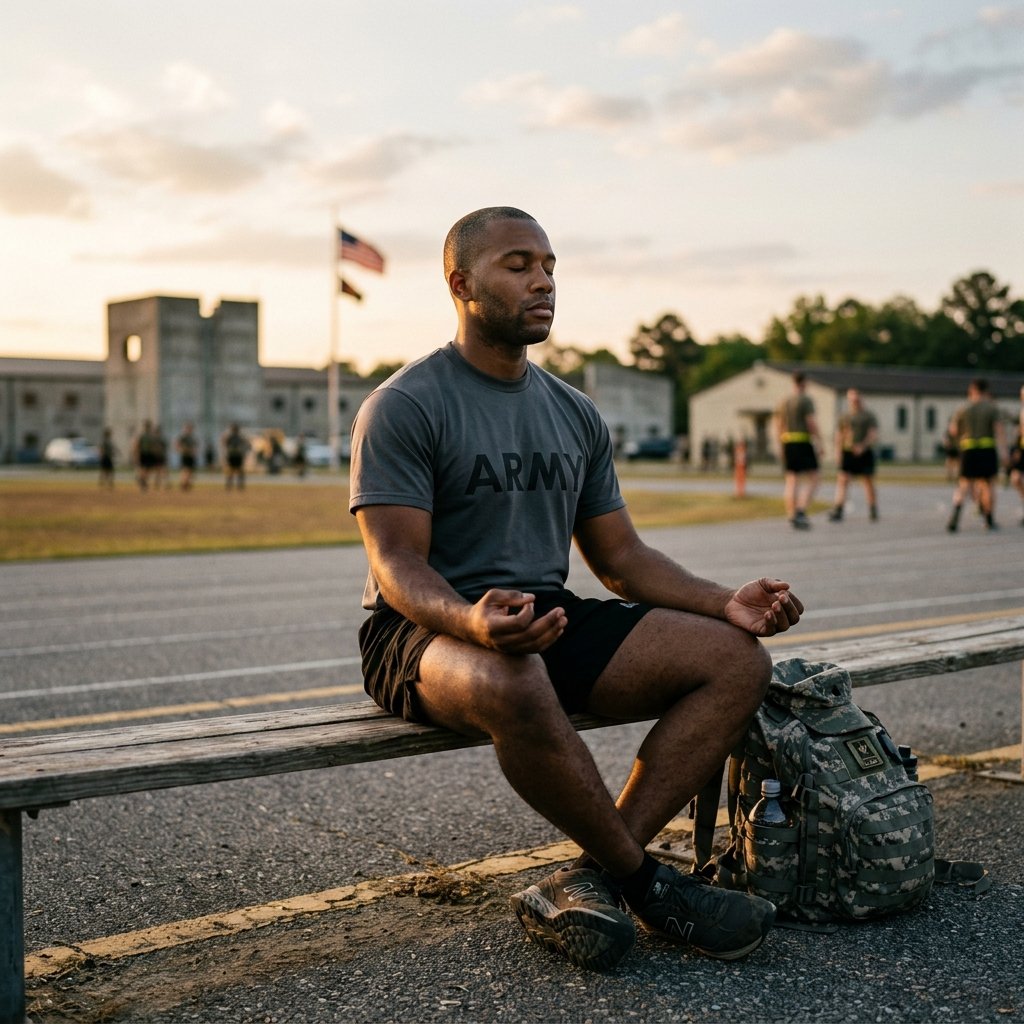
You can have the physical capability to score 480 on the AFT and still walk away with a 390 because anxiety, distraction, or poor pacing cost you points. The mental game is real, and elite soldiers train it just as deliberately as they train their deadlift.
Understanding Test Anxiety
Test anxiety on the AFT typically manifests as:
- Elevated heart rate before events even begin (wasting glycogen stores)
- Poor pacing decisions, especially in the 2MR (going out too fast)
- Catastrophizing after a weak performance in one event, affecting subsequent events
- Tight, restricted movement patterns due to muscular tension
The good news: all of these are trainable. Exposure and mental rehearsal are the two most powerful tools.
Mental Strategy 1: Simulate Test Conditions
Anxiety comes from the unknown. The more you've experienced something, the less threatening it becomes. In your training block, run at least 2–3 full practice tests — all five events, in order, with official rest periods between them.
This accomplishes two things:
- Your nervous system learns the experience isn't threatening.
- You identify weak points you can address before test day.
Mental Strategy 2: Pre-Event Routines
Elite athletes use consistent pre-performance routines to shift their nervous system from anxious to activated. Design a short (2–3 minute) routine for each event:
- MDL: Two slow deep breaths → visualize the lift → chalk hands → set grip → brace core → pull.
- HRP: 10 arm circles each direction → 5 slow push-up warm-up reps → set position → focus on the rep in front of you, not the total count.
- 2MR: Shake out your legs → consciously lower your shoulders → pick a landmark 200m ahead and run to it, then pick the next one. Never think about the finish line from the start.
Mental Strategy 3: Event Compartmentalization
The AFT has five events. A poor deadlift performance is over the moment you set the bar down. Soldiers who dwell on it lose focus for the next four events. Practice what sports psychologists call "compartmentalization":
- After each event, take 3 deep breaths.
- Say (internally or aloud): "That event is done. This next one is all that matters."
- Refocus your attention entirely on the next event's strategy.
Mental Strategy 4: Controlled Breathing
Box breathing (4-4-4-4: inhale 4s, hold 4s, exhale 4s, hold 4s) has been shown in military research to reduce cortisol and improve fine motor control under stress. Practice it daily and use it in the 5 minutes before each AFT event.
The Night Before
- Prepare everything (uniform, gear, hydration) the night before to eliminate morning stress.
- Visualize yourself completing each event successfully — not perfectly, just confidently.
- Sleep 7–9 hours. Sleep is the single most important recovery and performance tool you have.
- Avoid screens in the hour before bed — blue light impairs melatonin production.
Track your test simulations with the AFT Calculator to build confidence from real data, not guesswork.
Dr. Rachel Kim
Sports Psychologist
A subject matter expert contributing to AFT Calculators to help soldiers better understand the Army Fitness Test and achieve peak readiness.